𝗣𝗮𝗽𝗲𝗿 𝗼𝗳 𝘁𝗵𝗲 𝗪𝗲𝗲𝗸: 𝗜𝗻𝘀𝗶𝗴𝗵𝘁 𝗳𝗿𝗼𝗺 𝗖𝗲𝗹𝗲𝗻𝘁𝘆𝘅Featured Paper: Chemotherapy enhances cancer vaccine efficacy and expands stem-like TCF1+CD8+ T cells https://www.sciencedirect.com/science/article/pii/S1535610826004253?via%3Dihub 𝗦𝗰𝗶𝗲𝗻𝘁𝗶𝗳𝗶𝗰 𝗰𝗼𝗻𝘁𝗲𝘅𝘁 · Cancer vaccines seek to elicit potent tumour-specific CD8 T cell responses, yet their clinical efficacy has often fallen short of expectations. · CarboTaxol is a conventional chemotherapy regimen but its capacity to impact the immune microenvironment remains incompletely understood. · TCF1+ stem-like CD8 T cells with self-renewal and differentiation capacities are increasingly recognised as key contributors to durable anti-tumour immunity. 𝗞𝗲𝘆 𝗶𝗻𝘀𝗶𝗴𝗵𝘁 The authors demonstrate that CarboTaxol promotes the expansion of TCF1+ stem-like CD8 T cells across multiple murine tumour models with supporting evidence from patient samples. 𝗪𝗵𝗮𝘁 𝘁𝗵𝗲𝘆 𝘀𝗵𝗼𝘄 • CarboTaxol expands TCF1+ stem-like CD8 T cells independently of vaccination or tumour presence. • CarboTaxol depletes immunosuppressive CD11b+Gr1+ myeloid-derived suppressor cells. • CarboTaxol enhances tumour control when combined with cancer vaccines through activation of TCF1/β-catenin signalling. • CarboTaxol further improves anti-tumour efficacy when combined with both cancer vaccines and PD1 blockade. 𝗪𝗵𝘆 𝗶𝘁 𝗺𝗮𝘁𝘁𝗲𝗿𝘀 One of the most intriguing aspects of the study arises from the apparent paradox of how a cytotoxic chemotherapy regimen, traditionally associated with eliminating proliferating cells, can also promote the expansion of stem-like CD8+ T cells and enhance the efficacy of cancer immunotherapies. The study therefore provides a compelling rationale for further investigation into how chemotherapy dose, scheduling and combination strategies influence effective cancer immunotherapy. It also reinforces the importance of understanding the immune consequences of conventional cancer treatments when designing next-generation immunotherapeutic agents. 𝗧𝗿𝗮𝗻𝘀𝗹𝗮𝘁𝗶𝗼𝗻𝗮𝗹 𝗿𝗲𝗹𝗲𝘃𝗮𝗻𝗰𝗲 𝗮𝘁 𝗖𝗲𝗹𝗲𝗻𝘁𝘆𝘅: At Celentyx, we recognise that understanding the interplay between tumour biology, immune suppression and T cell functional states is fundamental to advancing translational immuno-oncology. We have established advanced human tissue platforms spanning immunosuppression, tumour cell-killing, and patient-derived tumour slice models incorporating primary cells from healthy donors and patients across a range of cancer indications. These platforms enable mechanistic and functional assessment of therapeutic candidates across T/NK/B/myeloid cell responses, helping bridge the gap between preclinical discovery and clinical translation. 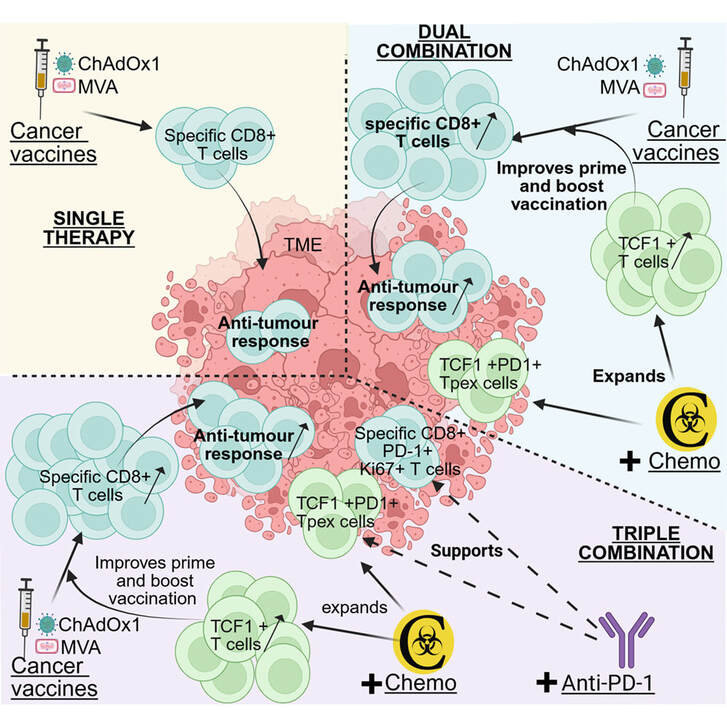 Chemotherapy enhances cancer vaccine efficacy and expands stem-like TCF1+CD8+ T cells
sciencedirect.com
0 Comments
Your comment will be posted after it is approved.
Leave a Reply. |
AuthorThe Celentyx team shares insights on immunology and drug discovery, alongside our latest research, news and activities. ArchivesCategories
All
|

- Home
-
Immunology Assays
- Antigen-specific Assays
- B Cells
- Fibroblasts
- Haemolysis Testing
- Human microglia
- Macrophages/Monocytes
- Granulocytes (neutrophils and eosinophils)
- NK Cells
- Phagocytosis Assays
- Regulatory T cells
- Spheroid Killing Assays
- Suppression Assays
- T Cell Activation Assays
- T Cell Exhaustion Assays
- TIL and dissociated tumour cell assays
- Tumour Cell Killing
- Therapeutic Area
- Services
- About
- Contact
- Blog
 RSS Feed
Web Hosting by Bluehost